What proxies work for Walmart drops? Residential proxies are the standard for Walmart online drops. Walmart runs HUMAN Security (formerly PerimeterX) on high-demand product pages, which blocks datacenter IP ranges and evaluates IP reputation before queue entry. US-based residential proxies with clean trust scores pass the reputation check that kills datacenter attempts.
Walmart drops move fast. A Pokémon TCG set restock, a limited console drop, a hyped sneaker release — the window from in-stock to sold out on Walmart.com is often under 60 seconds. If your proxy setup is wrong, your bot fails before it touches the queue.
The good news is that Walmart's anti-bot is less aggressive than Pokémon Center or Nike SNKRS. The bad news is that "less aggressive" does not mean forgiving. Datacenter proxies still fail. Burned shared pool proxies still get flagged. And the speed of Walmart restocks means proxy quality shows up immediately in your success rate.
Walmart's Anti-Bot Stack in 2026
Walmart uses HUMAN Security, which absorbed PerimeterX in 2022, as its primary bot detection layer. HUMAN Security evaluates multiple signals simultaneously: IP reputation, TLS fingerprint, HTTP header patterns, and session behavior. Passing the IP check is necessary but not sufficient on its own.
For proxy purposes, the IP reputation check is what determines whether your request gets into the queue at all. HUMAN Security maintains scoring on IP ranges based on prior bot activity, datacenter ASN membership, and behavioral history. A request from a flagged IP range gets challenged or blocked before it processes.
Datacenter IPs from AWS, OVH, and Hetzner are in the blocklist. Walmart's HUMAN Security configuration is slightly less strict than Pokémon Center's system, but the datacenter ASN flag still kills most datacenter proxy attempts on high-demand product pages.
What Makes Walmart Different from Sneaker Sites
Walmart's checkout flow is faster than Shopify-based drop sites. There is no prolonged queue system on most Walmart restocks — products go in stock, your bot adds to cart, and checkout completes in seconds rather than minutes. This changes the proxy calculus in two ways.
First, session length matters less than on Shopify. You are not holding a queue position for 30 minutes. The checkout window is short, which means sticky session expiry is rarely the failure mode it is on Pokémon Center or Supreme drops.
Second, speed matters more. The restock window is so tight that a proxy pool with lower latency to Walmart's servers — which run through AWS infrastructure in the US East region — gets more checkout attempts completed per second than a slower proxy pool.
Residential Proxies for Walmart Drops
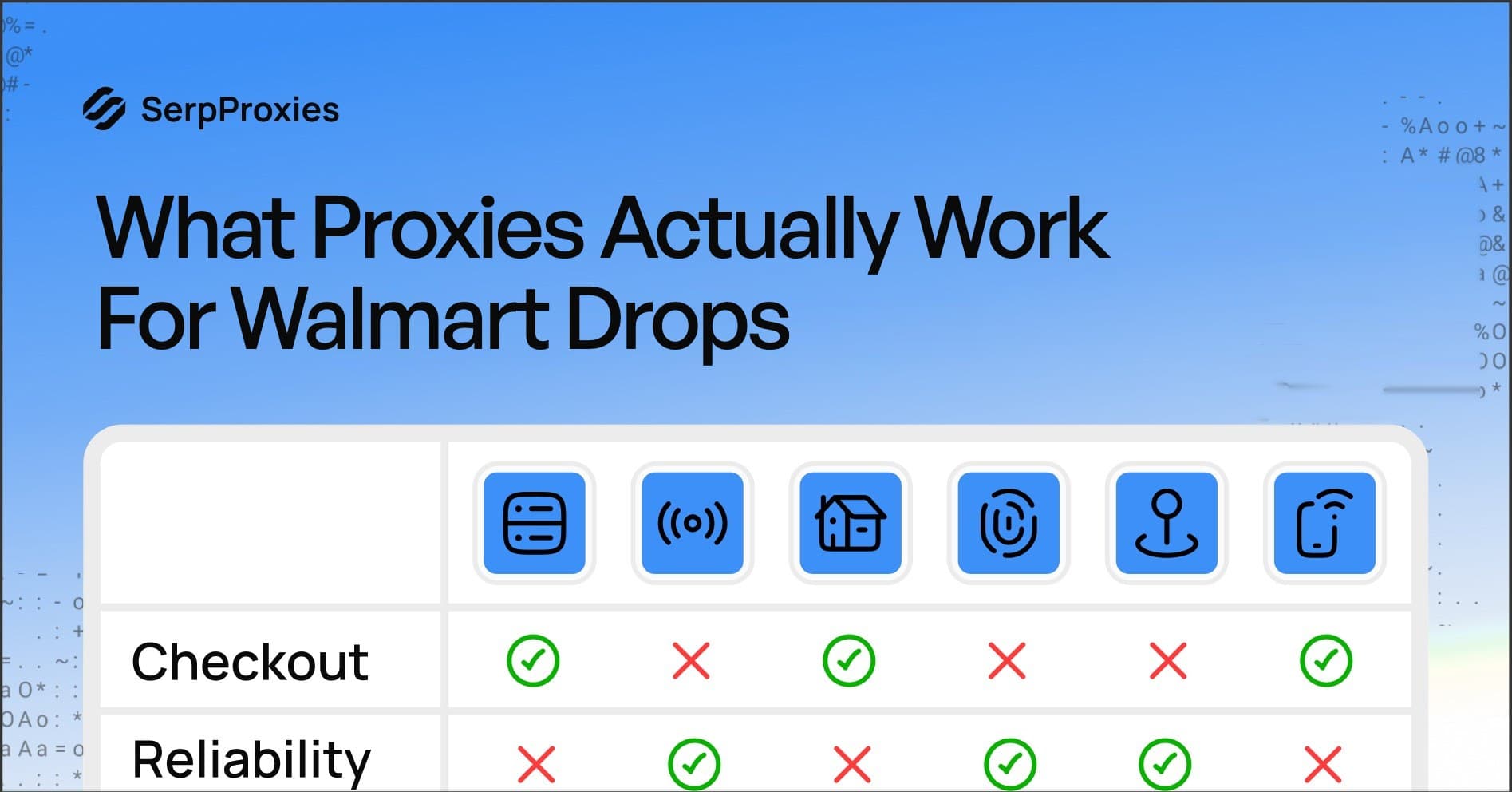
Residential proxies are the correct choice for Walmart. Real home ISP IPs pass HUMAN Security's reputation check cleanly. The trust score of a residential IP is high enough that HUMAN Security does not challenge it the way it challenges datacenter ranges.
For Walmart specifically, US-based residential proxies perform better than IPs sourced from other regions. HUMAN Security's behavioral scoring includes geographic consistency — a request for a Walmart.com product from a US residential IP is consistent with normal customer behavior. An IP from an unusual geographic location for Walmart shopping adds a small amount of friction even if the IP type is residential.
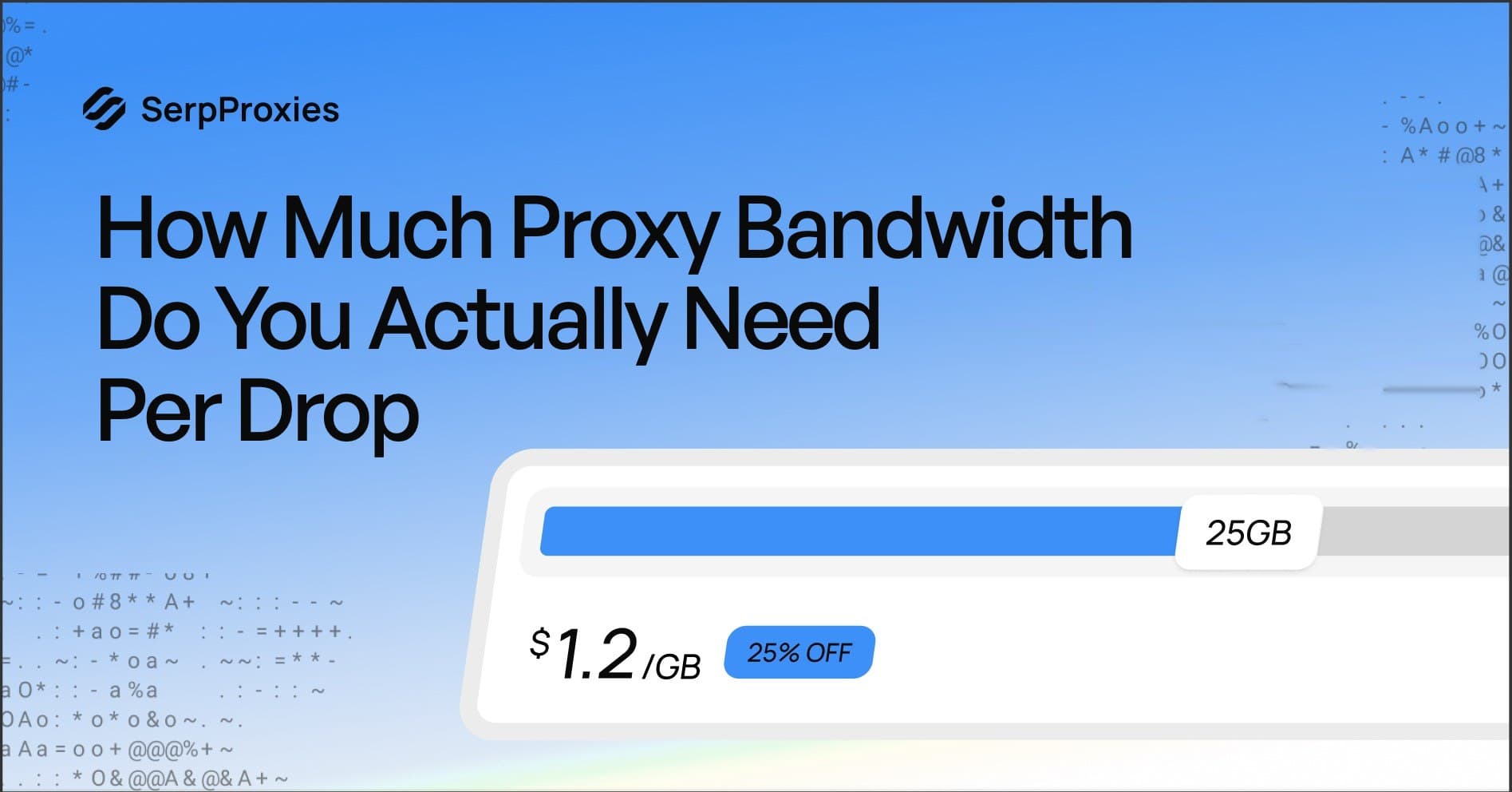
SerpProxies Premium Residential starts from $1.20/GB. For Walmart drops, use rotating residential proxies for monitoring — watching product pages for stock changes — and switch to sticky sessions for the checkout flow.
The bandwidth consumption on Walmart drops is lower than on Pokémon Center because checkout moves faster. A high-task Walmart run typically uses less bandwidth per successful checkout than a 30-minute Pokémon Center queue session.
Private Pool vs Shared Pool on Walmart
Shared residential pools carry the same risk on Walmart that they carry everywhere: burned IPs from other users degrade your success rate without any visible signal. HUMAN Security's IP scoring tracks history, and IPs that have generated bot-like signals in previous sessions start with a lower trust score on the next attempt.
SerpProxies Private Residential at $2/GB keeps IPs exclusive to SerpProxies customers. Those IPs are not being hammered by other botters outside the network, which means their trust scores stay cleaner for repeated use across multiple restock events.
ISP Proxies for Walmart
ISP proxies can work on Walmart but are less reliable than residential proxies. HUMAN Security's configuration on Walmart is stricter about ISP ranges than some other platforms. Static ISP IPs that get flagged remain flagged — unlike rotating residential proxies where a new rotation gives you a fresh IP.
There are specific scenarios where ISP proxies make sense for Walmart: when you need maximum speed for an extremely short restock window and are willing to accept higher flag rates, or when running a mixed setup where ISP proxies handle early monitoring tasks and residential handles checkout.
SerpProxies Static ISP starts from $1.20 per IP with unlimited bandwidth. If you use ISP proxies for Walmart, keep a residential fallback pool ready.
Which Bot to Use for Walmart Drops
Refract is the dominant bot for US retail drops including Walmart. It has powered over five million checkouts across Walmart, Target, Best Buy, and Amazon, with a dedicated Walmart module that handles account-based checkout and Walmart's frequent in-stock and out-of-stock cycling. Refract is the right choice for buyers focused primarily on US retail.
Stellar AIO also supports Walmart through a dedicated module and handles a broader range of sites including Pokémon Center, making it the better choice for botters who need to cover both sneaker sites and retail.
Both bots support per-task proxy assignment. Set one proxy per task in your bot's task configuration. Do not share proxies across tasks — HUMAN Security tracks session patterns, and multiple simultaneous tasks from the same IP trigger velocity detection.
Setting Up for Walmart Restocks
Walmart restocks are harder to predict than scheduled drop events. Products go in stock without announcements, often at irregular hours. Effective Walmart botting requires persistent monitoring alongside your checkout setup.
Use rotating residential proxies for monitoring. Running product page checks from a rotating pool distributes request traffic across many IPs and avoids accumulating too many hits on a single address before the actual restock.
Pre-configure your bot tasks before the restock window. Tasks that are already running when stock appears process faster than tasks started after you see the stock alert in a cook group. By the time the stock alert posts, faster setups have already checked out.
Key Takeaways
Walmart runs HUMAN Security, which blocks datacenter IP ranges and scores IP reputation before queue entry. Residential proxies are the correct choice for Walmart drops — US-based residential IPs with clean trust scores pass the reputation check consistently.
Private residential pools outperform shared pools because IP trust scores carry over across sessions. ISP proxies can work on Walmart but flag more quickly than residential. Use one proxy per task, rotating residential for monitoring, sticky for checkout. Pre-configure tasks before the restock window — the stock window is too short to set up after the alert drops.
FAQ
What proxies work for Walmart online drops?
US-based residential proxies are the standard for Walmart drops. Walmart runs HUMAN Security, which evaluates IP reputation before queue entry. Clean residential IPs pass the reputation check that blocks datacenter proxy ranges.
Do datacenter proxies work on Walmart?
No for high-demand product pages. Walmart's HUMAN Security configuration blocks datacenter ASN ranges from AWS, OVH, and Hetzner. On lower-traffic product categories without aggressive bot protection, datacenter proxies may function, but for limited-item drops they fail consistently.
What bot should I use for Walmart drops?
Refract is the leading US retail bot with a dedicated Walmart module and over five million checkouts completed. Stellar AIO also supports Walmart and covers a wider range of sites for botters running both retail and sneaker drops.
How many proxies do I need for Walmart restocks?
One proxy per task plus a 20 percent buffer for retries. Walmart restock windows are short so you want all tasks running without competition for proxy resources when stock appears.
Why do my Walmart bot tasks fail at checkout?
Most Walmart checkout failures are either a flagged IP from HUMAN Security's reputation check, datacenter proxies in a protected category, or shared pool proxies carrying reputation damage from other users. Switch to private residential proxies and confirm US-based IP targeting.
Do I need sticky sessions for Walmart?
Less critical than on Shopify or Pokémon Center because Walmart checkout moves faster. For straightforward add-to-cart and checkout flows, short sticky sessions or even rotating proxies with careful task management can work. For account-based checkout flows that require session consistency, configure a 10 to 15 minute sticky session.