What is a subnet ban? A subnet ban is when a site blocks an entire IP range rather than a single address. When one IP in a /24 subnet gets flagged for botting, the site can ban all 256 addresses in that block simultaneously. Proxy providers that pack multiple customers onto the same subnet expose everyone on that block to a single botter's mistakes.
You ran clean tasks. Your bot settings were correct. Your accounts were in good standing. You still got zero checkouts, and you have no idea why.
The answer is probably not your bot and not your accounts. It is the subnet your proxies sit on. Someone else on your provider's shared pool hammered the same /24 block the week before your drop, and the ban that followed took out every IP in that range including yours.
This is the subnet ban problem, and it is the specific reason shared proxy pools underperform private pools on every high-competition drop.
How IP Banning Actually Works at Scale
When Nike's anti-bot system, built on Akamai, detects a pattern of bot traffic from an IP address, it does not just block that single IP. It evaluates the surrounding address space. If multiple IPs in the same /24 subnet are showing bot-like request patterns, the system can block the entire block: 256 addresses, all flagged at once.
This is computationally efficient for the anti-bot system and broadly effective because legitimate residential users almost never share a /24 subnet with hundreds of other users. Real home ISP addresses are distributed across many different blocks. A /24 subnet packed with bot traffic is a signal by itself.
Nike's scoring system retains subnet flags for weeks. A block that got hammered during a Jordan release is still carrying that reputation score for the next Dunk drop. If your proxies are on that block, you are starting every task with a degraded trust score before a single request fires.
The /24 Math Problem
A /24 subnet contains 256 IP addresses. Cheap shared proxy providers routinely put dozens of customers on the same /24 block because it is cheaper to source IPs from a concentrated range than to maintain diverse subnet distribution.
If you are one of 20 customers sharing a /24 block and three of those customers ran aggressive tasks during a previous drop, the entire block carries reputation damage. You might have 50 clean-looking proxies but if they all resolve to addresses in the same flagged /24, they perform like burned IPs.
Buying 100 proxies that sit on the same /24 subnet gives you 100 IPs that behave like one source to any anti-bot system running subnet-level analysis. The number of IPs becomes irrelevant.
Why Datacenter Proxies Make This Worse
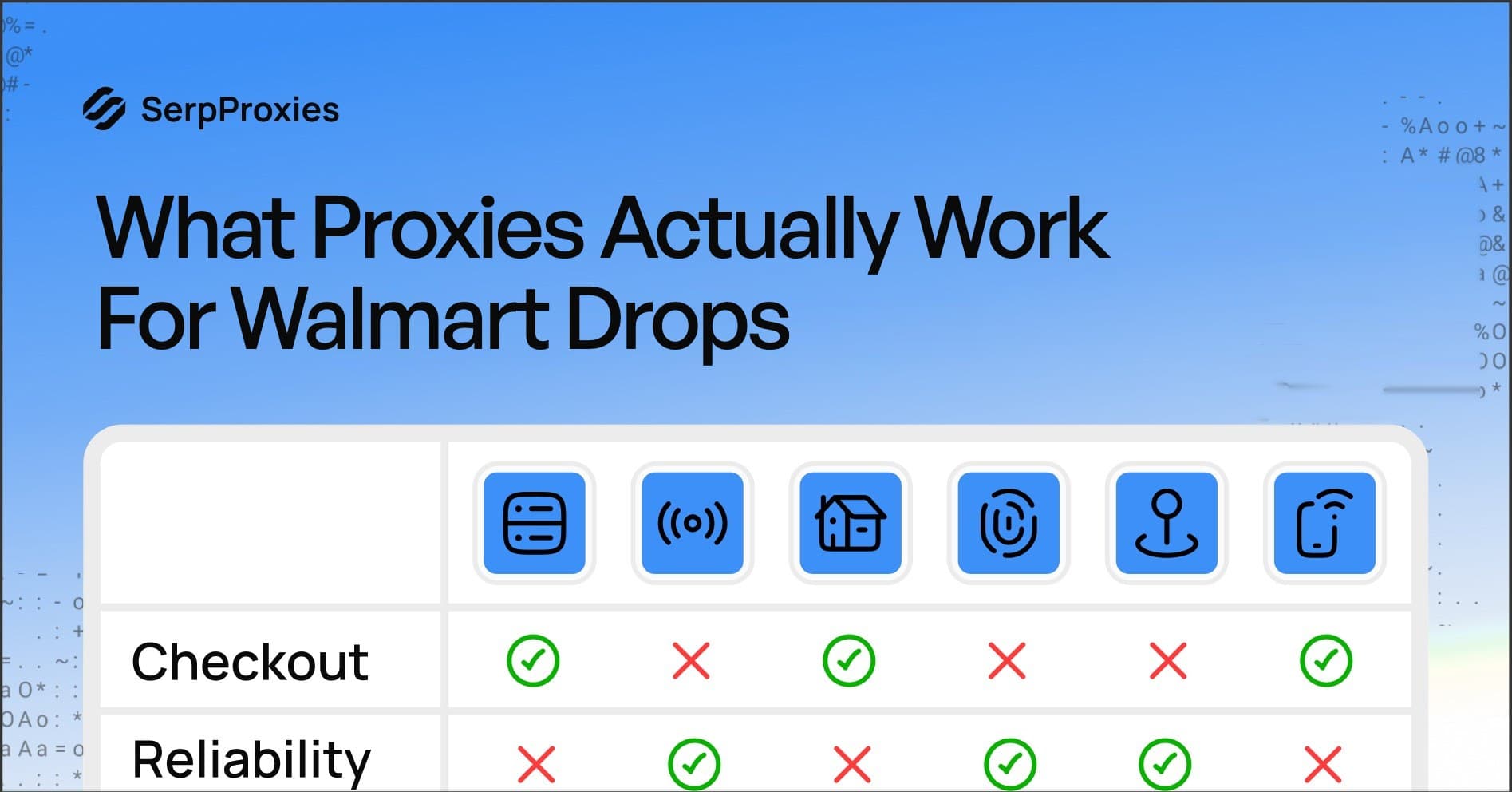
Datacenter proxies are the worst offenders for subnet bans, which is why the term "datacenter proxies sneakers" is almost always followed by "do not use these."
Datacenter IPs come from cloud providers — AWS, OVH, Hetzner, Vultr, DigitalOcean. Every major anti-bot system has the ASN (Autonomous System Number) ranges for these providers fingerprinted. A request from an OVH IP is flagged as datacenter traffic before Akamai even checks the specific address. The entire ASN is treated as a high-risk range.
Cheap datacenter proxy providers pull IPs from these same cloud ranges. When they pack multiple customers onto a /24 block within an already-flagged ASN, they are stacking two layers of reputation damage: the ASN-level datacenter flag and the subnet-level bot activity history.
This is why datacenter proxies for sneaker drops fail even when the specific IP has never been used for botting before. The ASN reputation precedes any individual IP's history. The IP is guilty by association before it does anything.
Why Even "Clean" Datacenter IPs Fail
Providers who claim to sell "clean" datacenter proxies are typically selling IPs they have cycled recently. The underlying ASN flag does not clear when an IP changes hands. Akamai and PerimeterX track ASN-level signals independently of individual IP history. An IP from Hetzner's ASN is an IP from Hetzner's ASN regardless of what that specific address has done recently.
There are narrow use cases where datacenter proxies still function: basic Shopify boutiques without serious anti-bot protection, web scraping targets that do not run ASN-level blocking, and monitoring tasks where you just need speed and do not need checkout success. For any site running Akamai, PerimeterX, or Datadome, datacenter proxies are effectively useless.
How Shared Residential Pools Inherit the Same Problem
Residential proxies are harder to block because they come from real home ISP connections. Anti-bot systems cannot ban residential ranges wholesale without risking legitimate customer traffic. But shared residential pools still carry subnet risk when providers cut corners on IP distribution.
A shared residential pool with poor subnet diversity puts multiple customers on nearby IP blocks within the same neighborhood of addresses. When one customer's failed tasks generate enough signals to trigger a soft ban on their IP's surrounding /24, the ripple can affect neighboring addresses that share similar subnet characteristics.
The key difference from datacenter is that the ban is typically narrower and softer — a residential /24 ban is less common than a datacenter ASN ban. But it happens, and it is responsible for unexplained drop day failures where everything looks correct but checkout success rates are low.
Private residential pools solve this by maintaining IP distribution across diverse subnets and ISPs. SerpProxies Private Residential at $2/GB uses dedicated IP allocations across varied subnet ranges rather than packing customers onto concentrated blocks. The IPs have not been shared with other users, which means no inherited reputation damage from someone else's drop.
What Private Pools Actually Mean for Subnet Risk
A private proxy pool means the IPs are exclusive to one provider's customers. They have not been resold to competing networks or distributed to the broader market. The practical consequence for subnet bans is direct: if no other botter has used those IPs on your provider's network, there is no trail of ban-triggering activity on those subnets.
SerpProxies maintains private residential and ISP pools with genuine subnet diversity. The ISP proxy pool spreads across multiple ISP networks and subnet ranges rather than sourcing from a concentrated block. SerpProxies Static ISP starts from $1.20 per IP with unlimited bandwidth.
The difference shows up in two specific scenarios: the hours before a high-competition drop when anti-bot systems are running elevated monitoring, and on sites with aggressive subnet-level detection like Nike SNKRS and Supreme. Both scenarios punish shared pool users and reward private pool users at the exact moments that matter most.
How to Evaluate Subnet Quality Before You Buy
Before committing to a proxy provider for drop day, check the subnet distribution of the IPs you are getting. Most proxy providers will share sample IPs on request. Run them through a subnet lookup to see how many fall in the same /24 or /16 blocks.
A provider with 100 proxies spread across 80 or more distinct /24 subnets is distributing risk properly. A provider with 100 proxies clustered in five /24 blocks is a liability on drop day regardless of what they claim about IP freshness.
Check ASN ownership on any datacenter proxies you are evaluating. If the ASN belongs to AWS, OVH, Hetzner, or any major cloud provider, those IPs are pre-flagged on Nike, Adidas, and Supreme before they hit the site.
Key Takeaways
Subnet bans affect all proxy types but hit datacenter proxies hardest because ASN-level blocking adds a second layer of reputation damage on top of subnet-level activity flags. Shared residential pools carry subnet risk when providers concentrate customers on nearby address blocks. The drop-day consequence is failed tasks that have nothing to do with your bot or account setup.
Private proxy pools eliminate inherited subnet damage because IPs have not been shared with users generating ban-triggering activity. Subnet diversity within a pool reduces the blast radius of any single ban. Datacenter proxies for sneaker drops are dead on every site running Akamai, PerimeterX, or Datadome.
FAQ
What is a subnet ban in sneaker botting?
A subnet ban is when a retailer's anti-bot system blocks an entire IP range rather than a single address. A /24 subnet contains 256 IPs. If bot activity from IPs in that block triggers a ban, all 256 addresses can be flagged simultaneously. Proxy providers that put multiple customers on the same subnet expose all of them when one customer's activity causes a ban.
Why do datacenter proxies fail on Nike and Adidas?
Nike and Adidas use Akamai, which maintains ASN-level blocklists of known datacenter IP ranges from providers like AWS, OVH, and Hetzner. A request from one of these ASN ranges is flagged as datacenter traffic before Akamai checks the specific IP's history. The ASN flag precedes any individual IP reputation check.
Can shared residential proxies get subnet banned?
Yes, but less aggressively than datacenter proxies. Residential IPs are harder to block wholesale because banning them risks blocking real customers. But shared residential pools with poor subnet diversity can have neighboring addresses flagged together when one user's activity generates enough signals on a nearby /24 block.
What makes a private proxy pool different from a shared pool?
A private pool reserves IPs exclusively for one provider's customers. Those IPs have not been distributed to competing networks or resold to other users. The subnet history is clean because no other botter has been using those addresses to generate ban-triggering signals. On drop day, private pool IPs start with a baseline trust score that shared pool IPs often cannot match.
How do I check if my proxies have good subnet diversity?
Run sample IPs through a subnet lookup tool to see how many fall in the same /24 or /16 blocks. A well-distributed pool of 100 proxies should span at least 80 distinct /24 subnets. Check ASN ownership on any datacenter proxies — if the ASN belongs to a major cloud provider, those IPs are pre-flagged on serious drop sites.